
Bacteriostatic water is a specialized, sterile aqueous solution formulated with a small amount of preservative to inhibit microbial proliferation once a container is accessed. In modern laboratories—especially in the UK, where traceability and documentation standards are stringent—knowing when and why to select this diluent can safeguard sample integrity, streamline bench workflows, and reduce wastage. This guide explains what it is, how it compares with other common diluents, and the quality and compliance considerations that responsible research teams prioritize. It is written for research contexts only and is not about clinical or veterinary use.
What Is Bacteriostatic Water? Composition, Mechanism, and Stability Insights
At its core, bacteriostatic water is sterile water that contains a low concentration of a preservative—most commonly benzyl alcohol at approximately 0.9%—to inhibit the growth of many bacteria after the container has been opened. The operative word is “bacteriostatic,” not bactericidal: the solution is designed to slow or prevent bacterial replication rather than to kill all microbes outright. This distinction matters for laboratory planning, because while the preservative extends workable timeframes for multi-access use, it does not convert the diluent into a universal antimicrobial agent.
The mechanism is largely driven by the preservative’s interaction with bacterial cell membranes and proteins, creating an environment where typical proliferation is curtailed. It is effective against a broad range of organisms, though resistance and variability exist across species and conditions. Spores and certain Gram-negative species can be less susceptible. As a result, aseptic technique remains essential even when using a solution labeled as bacteriostatic. Good lab practice—clean work surfaces, appropriate PPE, and minimizing unnecessary vial access—complements the preservative’s activity and helps maintain sample integrity.
Another practical hallmark of bacteriostatic water is the way its formulation supports multiple accesses to the same container over a defined time window stated by the manufacturer. In many labeled products, this window is capped; always follow the stated shelf-life and institutional SOPs. Visually inspect the solution for particulate matter or discoloration and do not use it if compromised. While general pH specifications can be moderate (often near neutral), check the actual pH, excipients, and specifications on the Certificate of Analysis (CoA) to confirm suitability for your analyte or matrix.
It’s also important to separate the concept of “bacteriostatic” from isotonicity. Bacteriostatic water is not saline by default; it is water plus preservative. That means ionic strength and osmolarity are not equivalent to 0.9% NaCl solutions. If your assay is sensitive to ionic conditions, buffering or using an isotonic diluent (such as normal saline or PBS) may be more appropriate. Where peptide or protein conformation is a concern, the presence of benzyl alcohol can influence stability for some targets. Always cross-check manufacturer data, pilot small-scale compatibility tests, and document results for method robustness. For further reading and a UK-based perspective, see bacteriostatic water.
Bacteriostatic Water vs. Sterile Water and Saline: Selecting the Right Diluent for Laboratory Tasks
Choosing between bacteriostatic water, sterile water, and isotonic saline starts with the experimental question. Sterile water without preservatives is typically single-use: once opened, it lacks the additional safeguard that inhibits microbial replication in case of accidental environmental exposure. In workflows where any preservative could interfere—think sensitive enzymatic reactions, certain LC-MS analyses, or assays where trace organics are problematic—preservative-free sterile water is often the conservative choice.
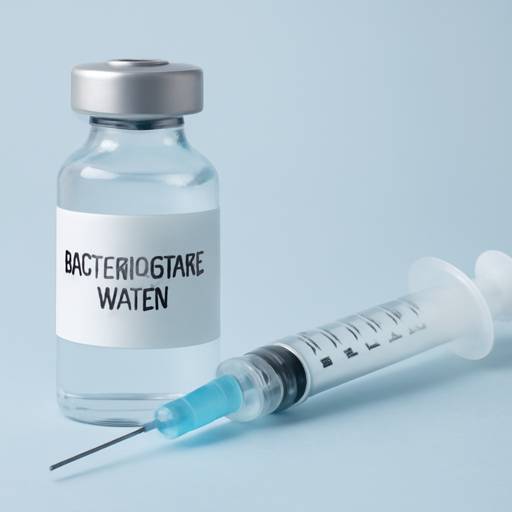
By contrast, bacteriostatic water offers a practical advantage in multi-access contexts. Its preservative allows a single container to be used across a short, defined period, reducing waste when small aliquots are needed repeatedly. However, that convenience has trade-offs. Benzyl alcohol, the typical preservative, can be cytotoxic and is generally unsuitable for cell culture applications or any work where live cells are integral to the assay readout. Similarly, its presence can confound microbial growth studies or bias microbiology controls. If your study requires living systems, preservative-free options or tailored buffers are usually more appropriate.
Saline (0.9% NaCl) and buffered saline (e.g., PBS) add ionic strength and, in the case of buffers, pH stabilization. These properties can be essential for maintaining protein structure, improving solubility, or preventing osmotic shock in certain contexts. Yet ionic species may also disrupt specific assays, particularly those involving ion-sensitive detection or when complexing agents could alter analyte behavior. Your choice should therefore triangulate three variables: analyte compatibility, assay design, and practical handling realities at the bench.
Real-world research scenarios illustrate the calculus. Analytical labs reconstituting reference standards may prioritize preservative-free sterile water for maximal chemical cleanliness, even if that increases the number of single-use vials. A biochemical lab preparing non-cellular calibrators across several days might prefer bacteriostatic water to reduce waste, provided validation shows no preservative interference with detection chemistry. In contrast, a cell biology group would often avoid bacteriostatic solutions altogether, leaning on saline or buffered systems to protect cells and maintain physiological ionic strength. Align each decision with written SOPs, supplier specifications, and pilot tests that verify stability, signal-to-noise, and recovery for your exact method.
Quality, Compliance, and Handling Best Practices for UK Research Teams
In the UK, quality management around diluents—especially those resembling medicinal products—demands careful attention. While Research Use Only (RUO) materials exist specifically for non-clinical applications, products intended for parenteral use or clinical environments fall under separate, stricter frameworks. If your laboratory operates under GLP, ISO, or institutional governance, aligning procurement with documented specifications, batch-level traceability, and defensible quality evidence is essential. Obtain and archive CoAs confirming identity, purity, and relevant impurity thresholds, and ensure Safety Data Sheets are readily accessible for risk assessments under COSHH.
Researchers should also consider preservative-related hazards and compatibility. Benzyl alcohol can be a skin, eye, and respiratory irritant; labs should implement prudent handling, ventilation, and spill-response controls, as outlined in the SDS. From a method-development standpoint, conduct compatibility studies to confirm that neither the preservative nor any excipient interferes with the intended analysis—whether that’s spectrophotometry, chromatography, immunoassay, or other modalities. Negative and matrix-matched controls can help you surface preservative effects early, before they impact critical data.
Receiving and storage practices further underpin data reliability. Upon arrival, confirm container integrity, labeling, and temperature conditions per the supplier’s guidance. Quarantine the lot until inspection and documentation checks are complete. Label in-use containers with open dates and dispose of them at—or before—the stated beyond-use timeframe. Although bacteriostatic formulations offer flexibility for multi-access, they are not indefinite; once the manufacturer’s window closes or contamination is suspected, treat the container as expired.
UK-based labs also optimize operational efficiency. Next-day tracked delivery, proactive customer support, and access to technical documentation reduce downtime and improve audit readiness. Clear “not for human or veterinary use” labeling for RUO items helps prevent misapplication, and reputable suppliers will refuse orders that suggest non-research intent. For teams handling peptides, in particular, consider the bigger picture of supply-chain integrity: temperature-monitored logistics, independent third-party testing, and transparent batch documentation all contribute to reproducibility—even if your chosen diluent is ambient-stable. Ultimately, the best practice is to select the right diluent for the assay, validate it against method requirements, and support its use with rigorous documentation that would satisfy peer reviewers, collaborators, and auditors alike.

Sapporo neuroscientist turned Cape Town surf journalist. Ayaka explains brain-computer interfaces, Great-White shark conservation, and minimalist journaling systems. She stitches indigo-dyed wetsuit patches and tests note-taking apps between swells.
