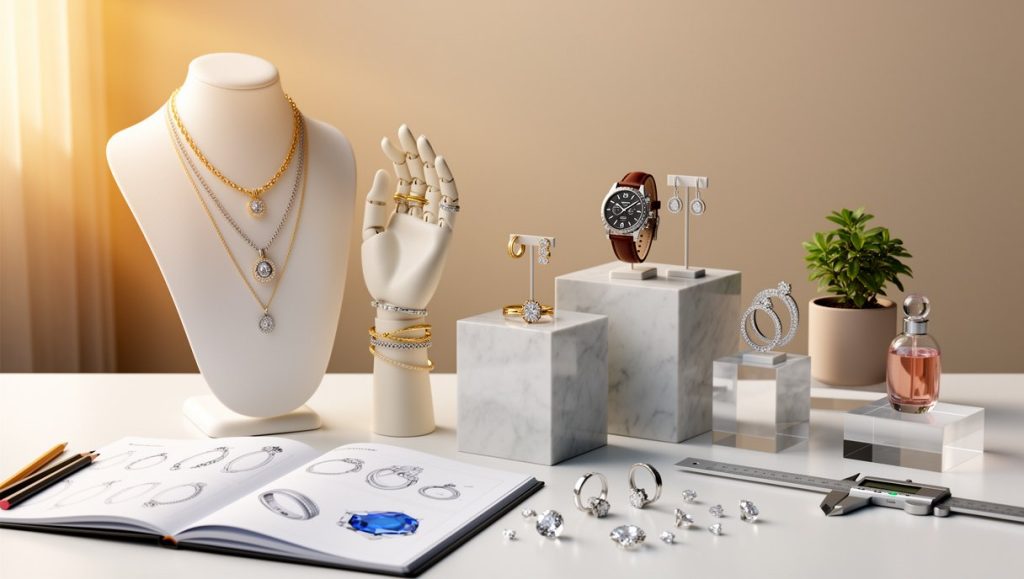

What a Jewellery Content Creation Tool Must Do to Win in a Visual-First Market
Modern buyers judge craftsmanship with their eyes first. That makes a purpose-built jewellery content creation tool one of the most important investments a brand, studio, or artisan can make. Unlike generic design software, a specialist platform understands the optical behavior of metals and gems: the mirror-like reflectivity of polished platinum, micro-scratches on brushed gold, the way pavé stones catch light, and the subtle color shifts in emeralds versus peridots. It should render these details faithfully so that every image communicates authenticity, desirability, and trust.
High-impact jewellery imagery requires more than a pretty picture. The best tools provide consistent lighting rigs for packshots, flexible scenes for lifestyle campaigns, and configurable on-model looks to suit different audiences and seasons. Precision matters: real-world scale, controllable depth-of-field, crisp focus on prongs and facets, and shadow options from soft studio gradients to clean “e-commerce white.” A platform engineered for fine goods makes it simple to swap materials (yellow, rose, or white gold), gemstones, and engravings while maintaining perfect alignment and perspective.
Speed and scalability are equally crucial. Jewellery lines often include dozens of SKUs with tiny variations—stone colorways, carat sizes, chain lengths, or finishes. A capable system automates repetitive work with reusable templates, so one creative direction can produce an entire collection’s worth of output. Batch rendering in 2K and 4K ensures assets are print-ready for lookbooks, OOH placements, and high-density screens, while also delivering optimized versions for product detail pages, marketplaces, and social feeds. The result: a brand can move from sketch to storefront in days, not months.
Finally, a category-specific solution anticipates the realities of jewellery production cycles. It enables pre-sale storytelling before final samples are cast, supports CAD-to-visual workflows for concept validation, and reduces dependence on complex photoshoots that require couriers, insurance, and calendar juggling. Consider a Jewellery content creation tool designed for jewellery, watches, and luxury accessories that brings together drag-and-drop studio control with photoreal outcomes. By addressing the physics of shine, reflection, and sparkle—alongside the logistics of content ops—it helps brands meet demand for fresh, consistent visuals across every channel.
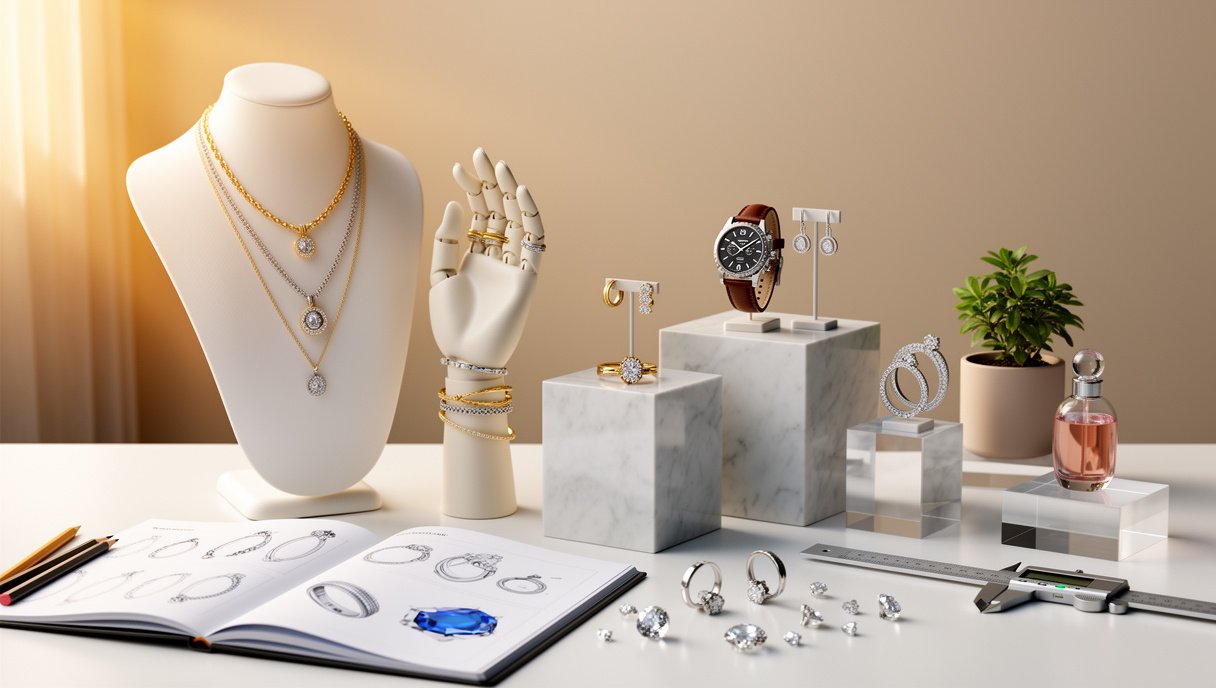
A Practical Workflow Blueprint: From Design Files to Omnichannel Assets in Hours
Brands that excel at visual storytelling follow a repeatable, efficient workflow. A modern jewellery content creation tool streamlines each step, from ingest to delivery, so teams can scale output without compromising quality.
1) Ingest: Start with the assets at hand—sketches for early concepts, CAD files for accurate geometry, or product photos for rapid turnarounds. The platform should interpret true scale, preserve geometry fidelity, and make it easy to map materials, stones, and surface finishes. This reduces manual rework and ensures that a solitaire’s table facet or a milgrain edge renders correctly under varied lighting.
2) Style: Choose from scene templates built for jewellery: neutral seamless backdrops for e-commerce; editorial surfaces like marble or velvet for lifestyle; and on-model configurations for human context. Look for intuitive controls to rotate pieces, set camera angles, and tune lighting rigs—softboxes, reflectors, or HDR environments—to capture authentic shine without harsh hotspots. This is where the brand’s signature aesthetic takes shape via presets for color temperature, contrast, and saturation.
3) Edit: Fine-tune micro-details that define craftsmanship. Adjust the balance between gloss and anisotropy on metals, intensify gemstone dispersion subtly, and add believable contact shadows. Smart editing tools should make complex looks—floating compositions, mirrored reflections, or prop interactions—straightforward. For collections with many variants, batch parameters help replicate the same hero angle and lighting across SKUs, preserving consistency.
4) Review: Zoom checks at 100–200% are non-negotiable in jewellery. Prongs must be crisp, halos even, and chains free of artifacts. Built-in proofing facilitates quick feedback loops among designers, merchandisers, and marketers. Versioning allows side-by-side comparisons for A/B testing—white backdrop versus soft gray, glossy versus matte surface—while comments keep decisions documented and searchable.
5) Deliver: Export multiple crops and aspect ratios tailored to their destinations: marketplace-compliant packshots, PDP zoom images, social-first squares and verticals, and high-resolution files for print. Support for transparent backgrounds, realistic drop shadows, and controlled file sizes keeps publishing effortless. Naming conventions and automated metadata ensure assets land in DAM or CMS systems cleanly, ready to go live.
6) Scale: Once a winning look is set, use templates to roll out full collections and seasonal refreshes. Swap stones, change metal finishes, or introduce engravings at scale without reshooting. Because timelines in jewellery can be tight—especially around gifting seasons—this workflow turns content production from a bottleneck into a strategic advantage.
Real-World Scenarios: Faster Launches, Lower Costs, and Stronger Brand Consistency
Jewellery brands compete in a landscape where speed and polish define perception. A specialized jewellery content creation tool changes the economics of production while unlocking higher-quality design storytelling.
• Capsule launches for independent artisans: An artisan in London planning a 10-piece capsule can visualize each SKU in multiple finishes and stone colors ahead of casting, capturing pre-orders to fund production. With lifelike renders that mirror final pieces, shoppers gain confidence early. The artisan swaps scenes—clean e-commerce views for the website, tactile lifestyle images for Instagram, and a few on-model shots for press kits—without booking studios or shipping prototypes.
• Microbrand watch release: A New York microbrand teasing a new chronograph needs macro-accurate visuals of brushed lugs, sunburst dials, and sapphire crystal reflections. Using consistent lighting and camera settings, the team produces hero shots, movement close-ups, and strap variants within hours. Because the platform outputs 2K and 4K, the same assets scale from PDPs to print catalogs without a second pass.
• Multi-brand retailer standardization: A regional retailer onboarding new vendors often receives inconsistent imagery—different angles, color casts, and shadow treatments. By funneling all products through one controlled studio template, the retailer achieves visual uniformity, sharper brand recall, and better conversion. Marketplace compliance becomes effortless, and weekly launch calendars become more predictable.
• Seasonal and cultural campaigns: For Ramadan collections in Dubai or Valentine’s Day drops in Paris, a centralized system helps creative teams switch themes quickly—warm gold lighting, jewel-toned backdrops, or soft florals—while retaining product accuracy. Inclusive on-model looks support a wider range of skin tones and styling choices, enabling more relevant storytelling across regions without coordinating multiple physical shoots.
• Continuous optimization for DTC brands: Direct-to-consumer jewellers thrive on testing. With rapid image generation, a marketing team can trial subtle background textures, hand poses, or angle variations, then promote the top performers to evergreen placements. This cycle reduces guesswork and ties creative decisions directly to performance metrics like PDP engagement and add-to-cart rates.
The operational impact is tangible. Costs fall as courier logistics, insurance, and studio downtime disappear. Lead times shrink from weeks to hours, helping teams keep pace with trend cycles and influencer moments. Creative consistency improves through reusable presets and lighting rigs, protecting brand equity as catalogs grow. And because the platform is built for the optical nuance of precious materials, the final imagery doesn’t just look good—it looks true. That trust shows up in fewer returns, stronger reviews, and confident customers who feel they can evaluate cut, setting, and finish from their screens.
In every scenario—artisan studio, heritage house, or fast-scaling DTC—specialized tooling turns visual production into a competitive edge. By pairing photoreal accuracy with workflow efficiency, a modern jewellery content creation tool helps brands show more, sell faster, and stay beautifully on-brand everywhere their audience looks.

Sapporo neuroscientist turned Cape Town surf journalist. Ayaka explains brain-computer interfaces, Great-White shark conservation, and minimalist journaling systems. She stitches indigo-dyed wetsuit patches and tests note-taking apps between swells.