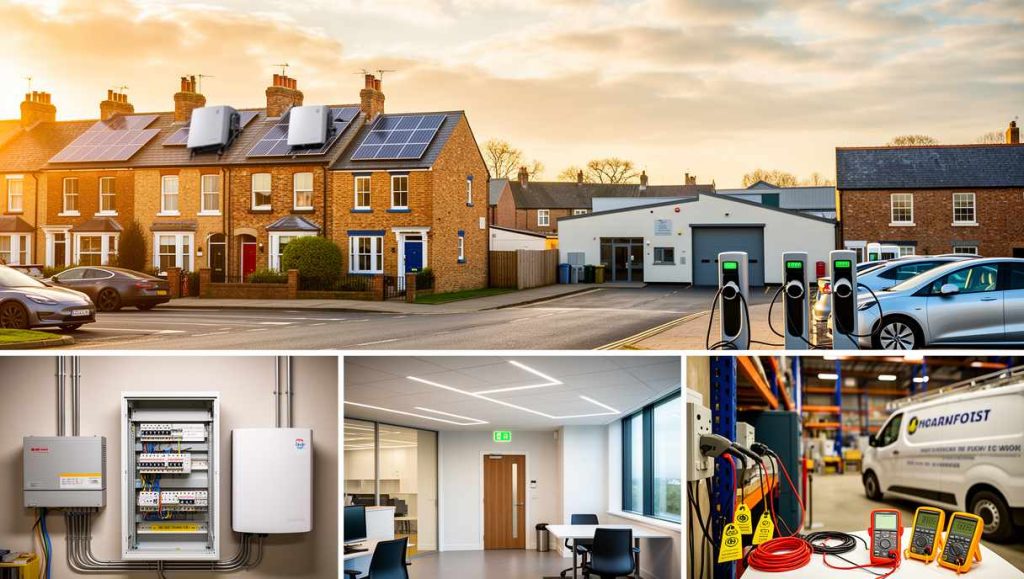

The shift to cleaner, lower-cost electricity isn’t just a national trend—it’s happening street by street across Bedford, from Kempston and Brickhill to Biddenham and Wootton. Battery storage lets households and businesses capture cheap or self-generated power and use it when it’s most valuable. Coupled with solar panels or time-of-use tariffs, a modern battery can cut bills, improve resilience during outages, and support a more flexible local grid. Whether you live near the River Great Ouse or operate a unit on a Bedford industrial estate, well-designed storage turns passive consumption into active energy management. If you’re exploring options for Battery Storage in Bedford, it pays to understand the benefits, the right system choices, and what a high-quality installation looks like in practice.
To learn more or to discuss a tailored solution for your property, see Battery Storage in Bedford.
Why Battery Storage Matters in Bedford: Lower Bills, More Control, Real Resilience
Energy use in Bedford typically peaks in the morning and evening—precisely when electricity prices or grid demand can rise. A domestic or commercial battery flips that dynamic by storing energy when it’s cheapest or when your solar is generating, then releasing it when you need it most. For households in Putnoe, Clapham, Bromham or Great Denham, a 5–15 kWh home battery can cover a significant share of evening consumption, powering lighting, cooking, and media without paying peak rates. Businesses around Bedford Heights or Interchange Retail Park can shave peaks, stabilise operations, and keep essentials running through short interruptions.
Paired with solar PV, a battery captures midday generation that would otherwise be exported for a relatively low return, then uses it on-site during higher-value periods. Bedford’s solar potential typically delivers around 1,000–1,100 kWh per kWp annually, which means a well-sized battery often increases solar self-consumption to 60–80% or more, depending on building load profiles. Even without solar, smart charging on time-of-use tariffs can reduce costs by shifting energy from off-peak to peak hours. Some homeowners in Bedfordshire also find value in grid services or export tariffs, but the cornerstone benefit remains simple: store when energy is low-cost, use when it’s high-cost.
Resilience adds a further layer of value. With an appropriate installation—often an EPS (Emergency Power Supply) or backup function—critical circuits can remain operational during an outage. In practice, that might keep refrigeration, lighting, broadband, and heating controls powered while the wider network is down. It’s not just rural properties that value this capability; even central Bedford has occasional supply interruptions from storms or planned works. A correctly designed system respects local network rules, safety standards, and works with your property’s earthing and protection arrangements to ensure reliable switchover and safe operation.
Policy and incentives strengthen the case. The UK’s Smart Export Guarantee rewards exported power, while evolving time-of-use tariffs create a predictable spread between off-peak and peak prices. For homeowners, 0% VAT currently applies to many domestic battery installations in Great Britain, including retrofit scenarios, improving payback. When you combine tariff arbitrage, enhanced solar usage, and potential resilience, home energy storage becomes a practical tool rather than a luxury upgrade—particularly in a town like Bedford where mixed housing stock and busy family schedules create distinct daily consumption peaks.
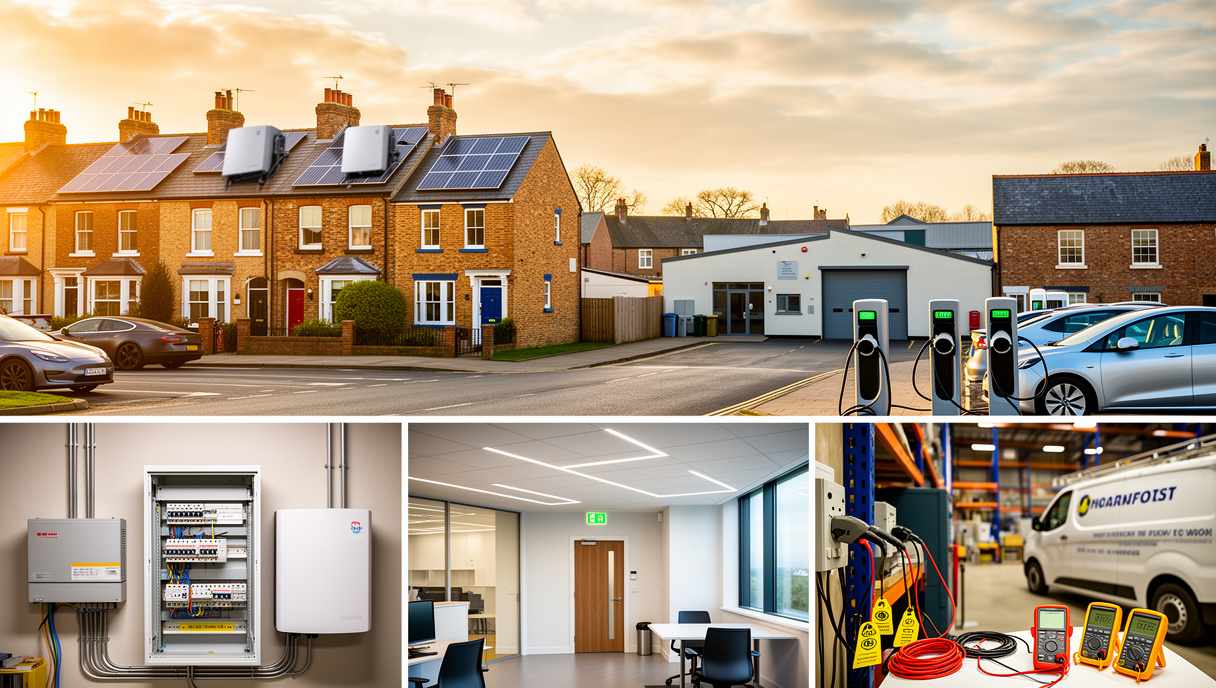
Choosing the Right System: Sizing, Safety, Technology, and Compliance
Every Bedford property has a unique energy profile. A family home in Elstow with an EV may draw most power after 6 pm; a cafe near the town centre might peak midday; a workshop in Kempston could have intermittent machinery loads. Effective solar battery design begins with load assessment: reviewing historical bills or smart meter data, mapping typical day/night use, and accounting for future changes like EV charging, heat pumps, or home office equipment. For many homes, 7–10 kWh strikes a balance between cost and coverage; larger properties or small businesses might opt for 10–20 kWh or modular stacks that grow with demand.
Next comes the choice between AC-coupled and DC-coupled systems. AC-coupled batteries add a dedicated battery inverter, which makes them well-suited to retrofitting alongside existing solar inverters. DC-coupled systems (often via a hybrid inverter) can be slightly more efficient with new PV because they reduce conversion steps, and they streamline monitoring. The optimum path depends on what’s already installed, roof capacity for solar, and whether backup power is essential. Your installer should also evaluate whether whole-home or critical-load backup is feasible, considering consumer unit layout and any necessary changeover equipment.
Chemistry matters for both performance and safety. Lithium iron phosphate (LFP) is increasingly popular for domestic and commercial storage thanks to strong cycle life and robust thermal characteristics. Some systems use NMC chemistries, which can offer high energy density but may have different temperature and lifecycle profiles. Whatever the chemistry, look for comprehensive warranties—typically 10 years with throughput guarantees—and clear end-of-life pathways. Smart features such as tariff scheduling, weather forecasting, and consumption analytics should be intuitive in the app, and remote firmware updates help keep the system secure and compliant.
Location and installation quality are critical. Garages, utility rooms, and sheltered outdoor positions are common in Bedford; installers must meet manufacturer clearances, ventilation requirements, and consider ambient temperatures. Fire safety guidance, cable routing, and labelling must align with UK standards. In particular, compliance with the latest edition of BS 7671 (the IET Wiring Regulations) and the IET Code of Practice for Electrical Energy Storage Systems is essential. Where required, your installer will notify or apply to the local Distribution Network Operator under G98/G99 procedures before commissioning. Proper earthing, RCD protection, surge protection where appropriate, and clearly documented testing ensure the system integrates safely with your existing installation.
Finally, think beyond day one. High-quality installations include a handover pack detailing system settings, backup limitations, service schedules, and emergency procedures. Cloud monitoring should display round-the-clock data on state of charge, charge/discharge power, and solar generation if present. Firmware and app updates help the battery keep pace with new tariffs and evolving best practice. With these pieces in place, Battery storage in Bedford becomes a reliable asset: predictable savings, transparent performance, and safety-first engineering baked in.
Real-World Scenarios in Bedford: Homes, EVs, and Local Businesses
Consider a semi-detached property in Brickhill with a family of four, a 5 kW solar array, and a 9.5 kWh battery. Without storage, daytime solar exports soar while the family pays grid rates in the evening. Adding the battery shifts surplus generation into the night, covering cooking, entertainment, and device charging. On weekends, when solar is plentiful, the battery often charges fully by mid-afternoon. Over a year, self-consumption of solar might rise from around 30–40% to 70% or more, trimming bills substantially and providing several hours of backup for key circuits during an outage.
Now take a Wootton homeowner with an EV and no solar. By charging the battery from off-peak tariffs after midnight, they can discharge into the evening peak. The EV still charges primarily overnight, but the battery shaves the household’s non-EV peak usage—cooking, laundry, heating controls—without paying peak rates. If solar is added later, a hybrid inverter can integrate it seamlessly, and the system’s modular capacity allows growth as needs change. This staged approach is increasingly popular in Bedfordshire, where households upgrade in steps rather than all at once.
For local businesses, batteries deliver both operational and financial value. A cafe near Bedford town centre may experience spikes when coffee machines, ovens, and refrigeration coincide; a right-sized commercial battery pairs with off-peak imports to flatten these short peaks, reducing exposure to expensive half-hourly rates. Light industrial units in Kempston can use storage to manage start-up surges and maintain lighting and IT during brief supply disturbances. While today’s charging structures differ from the historic “triad” charges, commercial battery systems still help avoid peak costs, optimise contracted capacity, and keep customer-facing operations uninterrupted.
Installation is methodical. It starts with a site survey to review consumer units, meter position, available spaces (garage, utility room, or external location), Wi-Fi signal strength, and any existing solar or EV charger. A proposal sets out system size, chemistry, inverter choice, backup options, and projected savings under realistic assumptions for Bedford’s solar yield and your tariff. Your installer handles DNO notifications or applications, schedules the installation day (often completed within one to two days for domestic systems), and performs full testing and commissioning. You’ll receive an electrical installation certificate, settings documented for backup and tariff schedules, and guidance on the app. Ongoing support covers firmware updates, health checks, and advice as your usage evolves—for instance, if you add a heat pump or second EV.
Realistic payback depends on usage patterns, energy prices, and how effectively the system is configured. Bedford homes that are out during the day but busy in the evenings tend to benefit strongly, especially with solar. Properties hosting home offices capitalize on daytime solar, while time-of-use tariffs suit night owls or EV drivers. Commercial sites with predictable peak windows often see the clearest savings, particularly if they coordinate storage with LED lighting upgrades and power quality improvements elsewhere on site. In every case, the aim is the same: align your energy flows with your priorities—cost, carbon, and continuity—using a safe, standards-compliant system that’s tailored to Bedford’s real conditions.
As interest grows across Bedford, from Biddenham to Elstow and beyond, demand is rising for practical, accredited installation that merges engineering rigor with everyday usability. With the right assessment, system design, and aftercare, home energy storage and commercial batteries stop being a curiosity and start being the hardest-working part of your energy plan—quietly charging, discharging, and saving in the background while you get on with the important stuff.

Sapporo neuroscientist turned Cape Town surf journalist. Ayaka explains brain-computer interfaces, Great-White shark conservation, and minimalist journaling systems. She stitches indigo-dyed wetsuit patches and tests note-taking apps between swells.