In a market where two-day shipping has become the bare minimum and customers expect real-time visibility from cart to doorstep, the logistics behind every order are no longer a back-office afterthought. They are a frontline brand experience. Merchants who treat fulfillment as a cost center quickly fall behind those who see it as a conversion engine powered by data. This shift has opened the door for AI-assisted eCommerce delivery to reshape how online retailers route packages, manage inventory, and communicate with buyers—all while lowering operational friction and turning delivery into a loyalty-building moment. What makes this evolution so powerful is that it doesn’t just accelerate existing processes; it fundamentally reimagines the flow of goods, decisions, and customer touchpoints with intelligence that learns and adapts in real time.
The Rise of Intelligent Logistics: AI in Last-Mile Delivery
The last mile has always been the most expensive and unpredictable leg of the fulfillment journey. Traditional routing tools rely on static rules, fixed time windows, and historical averages that quickly break down when a driver hits unexpected traffic, a customer changes delivery preferences, or a local event disrupts an entire neighborhood. AI-assisted eCommerce delivery replaces these brittle systems with dynamic models that ingest live data streams—weather, road closures, carrier capacity, and even social sentiment around local events—to continuously recalculate optimal drop-off sequences. The result isn’t just faster delivery; it’s a dramatic reduction in fuel costs, mileage, and missed time slots.
For online retailers running platforms like Adobe Commerce or Magento, the integration of intelligent dispatch engines means that the moment an order is placed, the system can evaluate carrier performance scores, current load, and real-time rate cards to select the best route for that specific package and that specific buyer. This level of granularity goes far beyond simple zone-based shipping tables. Machine learning models can predict which courier will deliver within the promised window at the lowest cost for a given zip code on a given day, and then automatically assign the shipment without human intervention. Over time, these models learn from exceptions—late deliveries, failed attempts, re-routing events—and refine their decision criteria so the entire operation gets smarter with every parcel.
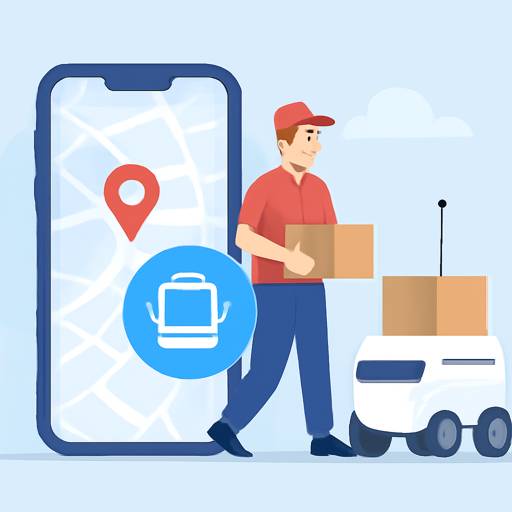
Beyond routing, computer vision and sensor-based AI are redefining the physical act of delivery. Autonomous delivery robots and drones may still be scaling, but more immediately, AI-assisted vehicle load optimization helps ensure that every truck leaves the distribution center with maximized capacity and a loading sequence that matches the planned delivery order. Combined with real-time geofencing, the system can trigger automated arrival alerts to customers only when a driver is genuinely minutes away—eliminating the frustration of vague four-hour windows and reducing missed deliveries. For merchants, this means fewer “where is my order?” inquiries and a measurable uplift in positive post-purchase feedback. The hidden advantage is that every successful, low-touch delivery strengthens the brand’s reputation for reliability, making last-mile intelligence a direct contributor to customer lifetime value.
From Data to Doorstep: How Predictive Analytics Powers Smarter Fulfillment
Before a package ever reaches the carrier, a network of AI-driven decisions determines how quickly it can leave the warehouse. AI-assisted eCommerce delivery starts its work at the inventory level, using predictive analytics to pre-position stock closer to likely buyers long before an order is placed. Demand forecasting models now blend traditional sales history with external signals—social media trends, competitor pricing changes, upcoming local weather events, and even macroeconomic indicators—to anticipate spikes in specific SKUs with remarkable accuracy. This allows merchants to allocate inventory across multiple fulfillment centers or micro-warehouses so that popular items are already sitting within same-day or next-day delivery radius of high-demand clusters.
When a surge does hit, the same intelligence orchestrates order routing across the fulfillment network. If a primary warehouse risks running behind, the system can dynamically split multi-item orders across facilities, consolidating shipments only when it’s faster and cheaper to do so, or sending items separately with a transparent communication plan for the customer. This adaptive approach is especially critical for growing brands that can’t afford to overbuild warehouse space yet must still offer competitive delivery promises. It transforms the fixed-cost burden of physical inventory into a flexible, demand-responsive asset.
Predictive intelligence also addresses one of the most persistent pain points in eCommerce: returns. High return rates erode margins and clog reverse logistics, but AI models that analyze product fit data, buyer behavior patterns, and return reasons can identify at-risk transactions before they leave the facility. When the system flags a likely return—perhaps due to a consistent size mismatch for a particular apparel item—it can trigger a pre-shipment validation step or even prompt personalized post-purchase content to help the customer get the product right the first time. For merchants using Magento Open Source or Adobe Commerce, embedding these predictive signals into the order management workflow ensures that every fulfillment decision—from picking sequence to carrier selection—considers both the immediate delivery promise and the long-term profitability of the order.
This data-driven orchestration doesn’t just improve speed; it fundamentally changes how businesses allocate capital. Instead of buying inventory based on large, batched purchase orders built on gut-feel forecasting, brands can use AI-generated recommendations to run leaner, reorder in tighter cycles, and redirect cash toward customer acquisition. The shift from reactive logistics to proactive fulfillment turns the entire supply chain into a competitive differentiator, where delivery precision becomes a core brand promise backed by real-time, self-correcting systems.
Building an Adaptive Delivery Experience with AI-driven Customer Communication
Delivery excellence no longer ends with a parcel left at the right door. The period between checkout and unboxing is a critical brand touchpoint, and AI-assisted eCommerce delivery transforms that window from a black box into an ongoing, personalized conversation. Natural language processing and generative AI now enable merchants to craft delivery updates that feel human, context-aware, and tuned to individual preferences—whether a customer wants proactive push notifications only for delays, or appreciates a cheerful “your order is on its way” message with an album cover image matching the product’s vibe.
The real power lies in adaptive communication that reacts to real-time events and customer behavior. If a shipment encounters a delay upstream, the system can automatically send a candid, empathetic update that includes a revised ETA and perhaps a small credit or discount as a goodwill gesture—without a support agent ever touching the case. At the same time, it suppresses redundant tracking messages for buyers actively refreshing the tracking page, reducing notification fatigue. These seemingly small touches have an outsized impact on trust; customers who feel informed are far less likely to initiate costly support inquiries or leave negative reviews rooted in uncertainty rather than actual poor service.
For retailers operating on robust platforms like Magento or Adobe Commerce, weaving delivery communication directly into the customer journey requires thoughtful integration. The checkout flow, order management system, and third-party shipping APIs must speak a common language so that AI models can pull real-time shipment data and buyer preferences into a unified messaging engine. A clear example of how this comes together can be seen in AI-assisted eCommerce delivery, where an agentic development approach for Magento eCommerce enabled the store to autonomously coordinate carrier selection, tracking updates, and exception handling without manual intervention. This kind of deep integration ensures that every communication—from a change in the delivery window to a post-delivery feedback request—feels orchestrated rather than automated, reinforcing the brand’s commitment to a seamless post-purchase experience.
Beyond reactive updates, forward-looking AI can use delivery data to drive marketing and reorder cycles. Imagine a specialty coffee roaster whose system recognizes that a customer’s last shipment is reaching the end of its freshness window. It can automatically trigger a replenishment suggestion with a guaranteed delivery date that matches the customer’s past preference for Monday morning arrivals. The delivery experience then becomes a continuous loop of relevance, where fulfillment intelligence feeds back into product discovery and loyalty. In this model, every successful on-time delivery isn’t just a logistical win—it’s a subtle, data-informed nudge toward the next purchase. By embedding AI into the delivery communication flow, brands stop treating shipping as a cost to minimize and start leveraging it as a durable relationship builder that drives repeat revenue and earned advocacy.

Sapporo neuroscientist turned Cape Town surf journalist. Ayaka explains brain-computer interfaces, Great-White shark conservation, and minimalist journaling systems. She stitches indigo-dyed wetsuit patches and tests note-taking apps between swells.